Peer Reviewed Article on Bipolar Disorder and Dysfunctional Family
Evaluation of Family Dysfunction in Patients with Schizophrenia and Bipolar I Disorder ()
Peyman Hashemianane, Mohammad Edris Sedaghatiii*
1Psychiatry and Behavioral Sciences Research Center, Ibn-e-Sina Hospital, Faculty of Medicine, Mashhad University of Medical Sciences, Mashhad, Iran.
2Unit of Family Medicine, Faculty of Medicine, North Khorasan University of Medical Sciences, Bojnurd, Iran.
DOI: 10.4236/jbm.2016.42001 PDFHTML XML 3,853 Downloads four,962 Views Citations
Abstruse
Introduction: Schizophrenia and bipolar I disorder are very common disorders in hospitalized patients. Considering that family problems are 1 of the factors in the appearance and persistence of schizophrenia and bipolar I disorder, in this study, we decided to investigate and compare the family functioning between these two groups of patients. Methods: The sample consisted of 50 patients with schizophrenia and 50 patients with bipolar I disorder. The third grouping was the command group which consisted of 50 normal dissimilar professions such as teachers, workers, housekeepers and others. Then the Family unit Functioning Scale (FAD-I) was used and the concluding results of the three groups were compared by SPSS V21 software. Results: In the schizophrenia group, 88.9% percent of patients had family functioning scores less than 109.81 which showed that they had severe family unit dysfunction merely in the bipolar I disorder grouping, 11.1% and all participants in the control group, had scores college than 109.81.Conclusion: Family unit dysfunction was seen in schizophrenic patients rather than in the other two groups.
Share and Cite:
Hashemian, P. and Sedaghati, M. (2016) Evaluation of Family unit Dysfunction in Patients with Schizophrenia and Bipolar I Disorder. Journal of Biosciences and Medicines, 4, i-five. doi: x.4236/jbm.2016.42001.
Received 23 Nov 2015; accepted 13 February 2016; published 16 February 2016

i. Introduction
Family problems are one of the factors in the appearance and persistence of schizophrenia and bipolar I disorder. Too, because family unit dysfunction is one of the factors in schizophrenia relapse, family therapy is recommended in reducing relapses.
No well-controlled evidence indicates that a specific family pattern plays a causative function in the development of schizophrenia [1] .
There are many kinds of family function for instance the double-bind concept formulated by Gregory Bateson and Donald Jackson to draw a hypothetical family or Schism and Skewed families or Pseudomutual and Pseudohostile families are some families who suppress emotional expression. Person with schizophrenia may have parents who may behave with overt criticism, hostility, and over involvement toward them. Families with high levels of expressed emotion may take high relapse rate for schizophrenia [two] .
A written report which was conducted in 2014 by Koutra et al. showed that a number of social and clinical factors contributed to family environs of patients with psychosis. Identifying the determinants of family functioning in psychosis is instrumental in developing understandings regarding the factors which may contribute to the rehabilitation or relapse of the patient and the back up required to strengthen positive family unit interactions [3] .
Another written report by koutra et al. in 2014 suggested that unbalanced levels of cohesion and flexibility, high criticism and brunt appeared to be the effect of psychosis and not risk factors triggering the onset of the illness. Furthermore, emotional over-involvement both in terms of positive (i.eastward. business organisation) and negative behaviors (i.e. overprotection) was prevalent in Greek families. Psychoeducational interventions from the early stages of the illness should be considered to promote caregivers' awareness regarding patients' illness, which in turn, may ameliorate dysfunctional family interactions [4] .
In a study performed by Sullivan and his colleagues in 2012 under the name "Family unit performance and the course of boyish bipolar disorder" revealed that decrease in parent-reported conflicts decreased adolescents' manic symptoms over a two-year study. Findings advise that family cohesion, adaptability, and disharmonize may be useful predictors of the course of adolescent mood symptoms [5] .
In a study that has been washed in 2013 by Vynstak et al. caste of concordance between patient- and family-reported family operation was significantly weaker in bipolar disorder. Subsequent analysis revealed that this discordance was driven past the reports of child and young adolescent family members of the patients with bipolar disorder. Results highlight the importance of collateral reports in the cess of family unit functioning, peculiarly among families of patients with bipolar disorder, in research and handling [half-dozen] .
In a study washed past Hassan A. Hussein and his assembly in 2012, significant association between patients' clinical characteristics and caregivers' socio-demographic characteristics with family functioning were seen. The researchers recommend conducting longitudinal studies on family caregivers, using psychiatric and family unit assessment/intervention for those caregivers with family dysfunction [seven] .
A report past Deboard and his colleagues in 2010 was performed on adolescent patients with bipolar I disorder, Data suggest that supportive, responsive parenting can buffer the effects of inter-parental conflict on children past reducing self-blaming attributions for parental discord [8] .
two. Method
In this study we decided to investigate family unit dysfunction between these 2 groups of patients with schizophrenia and bipolar I disorder.
This report was a instance-control and the sample consisted of patients who were hospitalized for schizophrenia and bipolar I disorder at Ibne-Sina Hospital in Mashhad in 2014 with age over 20 years sometime. They were confirmed by psychiatrists and they accept an IQ above 70 which were adamant by Wechsler intelligence calibration. They had no personality or whatever other psychiatric disorders.
Information were collected through interviews with family unit members of patients with schizophrenia and bipolar I disorder past using the Family Questionnaire (FAD-I). Control group was randomly selected in a way that they had no meaning psychiatric disorder in The Symptom Ckecklist 90˚ (SCL-90) and so interviews were conducted by the Family assessment Questionnaire (FAD-I). Families with scores less than 109.81 were considered to have severe family dysfunction.
Symptom Check Listing-90 (SCL-xc) questionnaire is i of the psychiatric diagnostic tools [9] .
In analyzing the information, the appropriate tests were used. Normality of distribution was studied by using i- sample Kolmogorov-Smirnov test. In cases of non-normal distribution Kruskal-Walis test was used. SPSS version 21 software was used in this study and the significance level of test was considered less than 5%.
Upstanding considerations: patient information was kept confidential.
3. Results
At that place was no significance difference on the basis of sex between iii groups (P-value = 0.683), (Table one).
Mean age in command grouping, Schizophrenia and Bipolar I disorder groups were 34.9, 35.3, 37.3 respectively (Kruskal-Walis = 1/499, P-value = 0/473) in which at that place was no significance departure on the basis of age between groups.
In family part exam, hateful difference between the three groups was significant using Kruskal-Walis test (74.361, P-value = 0.0001). It was also significant between schizophrenia and command group (P-value = 0.0001) and between bipolar and control group (P-value = 0.0001). Comparison of means of family function examination between schizophrenia and bipolar groups testify significant difference using contained t-test (t-test = 4.720, P-value = 0.0001).
Afterward comparing the iii groups on the basis of severe family unit dysfunction (FAD < 109.81), the following results accomplished:
The frequency of astringent family dysfunction (FAD < 109.81) in all the 3 groups were: 141 patients (94%) with no harm and 9 (half-dozen%) had damage. Based on the nowadays study, we examined the levels of family dysfunction which were not statistically significant (P-value = 0.329). The divergence in the average age of people who accept severe family dysfunction and those who practice not have astringent dysfunction is not statistically significant (P-value = 0.837).
According to Table ii, the difference in family dysfunction betwixt the three groups (schizophrenia, bipolar I disorder and control grouping) was significant (P-value = 0.002).
Co-ordinate to Table three, comparing family dysfunction in schizophrenia and bipolar I disorder groups also shows a statistically significant divergence (P-value = 0.031).
There is no statistically significant difference of astringent family dysfunction in schizophrenia and bipolar I disorder on the basis of sex (P-value = i.00) and age (P-value = 0.120).
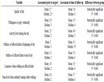
Table one. Frequency of three groups on the basis of gender.
Table ii. Distribution of family unit dysfunction in the studied groups.
Table iii. Distribution of family unit dysfunction in patients with schizophrenia and bipolar I disorder.
4. Discussion
Schizophrenia and bipolar I disorder are mutual in hospitalized patients and identifying their family function has an important role in their treatment plan [1] .
In this study, we investigate family dysfunction in patients with schizophrenia and bipolar I disorder hospitalized in Ibne-Sina Hospital, Mashhad. The three groups were analyzed for age, sexual practice and family unit dysfunction.
The results of this study shows that there was a pregnant departure between family function in the three groups indicating more impaired family functioning in schizophrenic patients than in patients with bipolar I disorder and control group. At that place was as well pregnant deviation between schizophrenic and bipolar groups.
In a study performed past Sullivan and his colleagues in 2012 in Usa, family functioning data were collected from 58 families of adolescents with bipolar I disorder. In this study family dysfunction has been studied over two years by increasing periods of mania in adolescents [5] .
In a study conducted in 2014 by Koutra et al in Hellenic republic with name "Family functioning in families of beginning- episode psychosis patients as compared to chronic mentally ill patients and healthy controls", Family cohesion, flexibility and psychological distress were evaluated in families of 50 First Episode of Psychosis and 50 chronic patients, as well as l controls. Findings indicated impaired cohesion and flexibility for families of First Episode of Psychosis patients compared to controls, and lower scores for families of chronic patients compared to those of First Episode of Psychosis patients [4] .
In a written report done in 2013 by Weinstock L.M. et al. in USA with name "Concordance between patient and family reports of family functioning in bipolar I disorder and major depressive disorder" concordance betwixt patient- and family-reported family functioning were studied. In this study, 92 patients with bipolar I disorder and 121 patients with major depressive disorder and their families were evaluated. In the findings degree of concordance between patient- and family-reported family operation was significantly weaker in bipolar I disorder [half-dozen] .
5. Conclusion
In this report, family dysfunction in patients with schizophrenia and bipolar I disorder is compared with each other and with control group. According to our study, information technology can exist said that family dysfunction in schizophrenia and bipolar I disorder is college than in control group and also in schizophrenia is much higher than in bipolar I disorder.
6. Recommendation
This was a preliminary study to sympathise whether at that place is a relationship between family dysfunction in schizophrenia and bipolar I disorder or not. To know whether dysfunction equally an etiologic factor is involved in these diseases or not, family unit therapy intervention is needed.
NOTES

*Respective author.
Conflicts of Interest
The authors declare no conflicts of interest.
References
| [one] | Sadock, B.J., Sadock, 5.A. and Ruiz, P. (2009) Kaplan & Sodock's Comprehensive Textbook of Psychiatry. Vol. i, 9th Edition, Wolters Kluwer/Lippincott Williams & Wilkins, New York, 1432-1839. |
| [ii] | Sadock, B.J. and Sadock, W.V. (2008) Kaplan & Sadock's Curtailed Textbook of Clinical Psychiatry. 3rd Edition, Wolters Kluwer/Lippincott Williams & Wilkins, New York, 161-164. |
| [iii] | Koutra, G., Triliva, Due south., Roumeliotaki, T., Lionis, C. and Vgontzas, A.N. (2014) Identifying the Socio-Demographic and Clinical Determinants of Family Functioning in Greek Patients with Psychosis. International Journal of Social Psychiatry, pii: 0020764014540151. |
| [4] | Koutra, 1000., Triliva, S., Roumeliotaki, T., Stefanakis, Z., Basta, M., Lionis, C. and Vgontzas, A.Due north. (2014) Family Operation in Families of Beginning-Episode Psychosis Patients as Compared to Chronic Mentally Ill Patients and Healthy Control. Psychiatry Research, pii: S0165-1781(14)00548-4. |
| [five] | Sullivan, A.E., Judd, C.M., Axelson, D.A. and Miklowitz, D.J. (2012) Family Functioning and the Course of Boyish Bipolar Disorder. Behavior Therapy, 43, 837-847. http://dx.doi.org/x.1016/j.beth.2012.04.005 |
| [6] | Weinstock, 50.M., Wenze, South., Munroe, M.K. and Miller, I.Due west. (2013) Concordance betwixt Patient and Family Reports of Family unit Performance in Bipolar I Disorder and Major Depressive Disorder. The Journal of Nervous and Mental Illness, 201, 377-383. http://dx.doi.org/10.1097/NMD.0b013e31828e1041 |
| [7] | Hussein, H.A. and Khudhiar, A.1000. (2012) Family Functioning amongst Caregivers of Patients with Schizophrenia in Baghdad City. Karbala Journal of Medicine, five, 1204-1209. |
| [8] | De Board, Fifty.R.L. and Clin, J. (2010) Interparental Conflict in Context: Exploring Relations betwixt Parenting Processes and Children'due south Disharmonize Appraisals. Journal of Clinical Kid & Adolescent Psychology, 39, 163-175. |
| [ix] | Derogatis, Fifty.R. and Savitz, K.L. (2000) The SCL-90-R and the Brief Symptom Inventory (BSI) in Main Intendance. In:: Maruish, G.E., Ed., Handbook of Psychological Assessment in Main Care Settings, Vol. 236, Lawrence Erlbaum Associates, Mahwah, 297-334. |
Source: https://www.scirp.org/journal/paperinformation.aspx?paperid=63427

Post a Comment for "Peer Reviewed Article on Bipolar Disorder and Dysfunctional Family"